I saw her from across the room and knew exactly what had happened.
A precious friend of mine, head hung lower than usual, walked into the sanctuary with a bandage wrapped tightly around nearly her entire forearm. I’d been walking with her for months and immediately knew what it could mean. I imagined a late evening, swallowed by a heavy depressive episode, finally giving in to the temptation of self-harm.
I’d seen her battle it before. Even while sitting in church, she would dig her nails into her skin, almost clawing at herself—an outward expression of an inward torment. It was hard to watch, and even harder to imagine how much worse it became when she was alone. I could only imagine the pain that was driving her to do it.
As I stood in worship that morning, I couldn’t stop thinking about her. I prayed for her, grieved for her burden, and thanked God for the way she kept fighting for freedom.
And then, as He often does, the Holy Spirit began speaking to me.
“My bride is wounded,” He said. “Just. Like. This.”
Plainly, God was asking me to see this woman and her self-inflicted wound as a picture of the current state of the Church.
Just days earlier, I had spoken with my daughter about how we, as believers, are the Body of Christ. We are His ambassadors. This isn’t, and never has been, a solo assignment. We are united by our relationship with Jesus and our shared mission to make Him known. What happens to one member affects the whole body. If one is hurt, we all hurt.
But this wound hadn’t merely happened to my friend.
She had done it to herself.
It’s one thing to speak abstractly about division and discord. It’s another thing entirely when the Holy Spirit gives you a picture of the Church tearing at her own body— spilling blood, endangering life, and causing pain to every part.
“I separate, divide, and elect,” I heard.
At that very moment, my pastor had landed in Genesis 1, preaching about God’s work of separating light from darkness, land from sea, order from chaos.
“When I do it,” the Lord seemed to say, “it creates order.”
“But when My Bride does it, look at the destruction. Look at the pain. It reveals disorder.”
Immediately, examples flooded my mind.
Conversations in quiet corners filled with gossip that never stays a secret. Offenses that were never discussed but harbored, which grew into distance and isolation. Tensions left unaddressed. Keyboard wars and rage-baiting online. Jealousy. Criticism. Competition. Bitterness. Suspicion. Wounded people wounding people.
Every one of them another scratch.
Another tear.
Another cut.
Another wound inflicted upon the Body.
And suddenly I felt so burdened for the Church.
How can a body busy fighting itself ever hope to fight the real enemy?
How can a wounded army advance?
How can a divided body function?
“What can we do, Lord?” I pleaded.
The answer came through Scripture.
“We have the mind of Christ” 1 Corinthians 2:16. (NIV)
And, “In Him all things hold together” Colossians 1:17.
To heal the Body, we must restore the Head to His rightful place.
Every act of division begins with a departure from the mind of Christ. We start thinking according to our hurts, our preferences, our assumptions, our pride. But healing begins when we return to His thoughts, His perspective, and His commands.
He has already shown us what to do.
Be humble.
Forgive quickly.
Pursue peace.
Assume the best.
Bear with one another.
Speak truth in love.
Refuse gossip.
Honor one another above yourselves.
Jesus is able to hold the Body together. His love and commands are the thread. The Holy Spirit pulls, convicting, closing the gap that sin and offense have created. But we have to actually let Him heal it. We have to respond in obedience, not resistance.
The process isn’t always comfortable. Stitches pull. Healing takes time. But a wound left open only grows deeper. Becomes infected. The disorder lives on.
Perhaps the greatest tragedy is that many of the wounds weakening the Church are not coming from persecution outside her walls, but from attacks happening within them.
If we ever hope to stop being the walking wounded—spiritually exhausted, distracted, and ineffective against the true enemy—we must stop attacking one another.
We must stop resisting one another.
We must embrace unity as something worth protecting.
The imperfections and mistakes of our brothers and sisters are not inconveniences or indications to withdraw, criticize, or divide. They are opportunities to display the character of Christ. Opportunities for forgiveness. Opportunities for humility. Opportunities for sanctification. For growth.
The enemy would love nothing more than for the Church to keep clawing at herself.
But Jesus has something better.
A healed bride.
A unified body.
A people held together by His mind, His Spirit, and His love.
As worship ended that morning, I couldn’t stop thinking about my friend and the bandage wrapped around her arm.
The wound was real.
The pain was real.
But so was the possibility of healing…
I have not been able to shake the thought since:
The Bride is bleeding.
Not because the world wounded her.
But because she keeps wounding herself.
Lord, heal our hearts. Teach us to love one another and become a people known more for healing than hurting.
“By this all people will know that you are My disciples: if you have love for one another (John 13:35, NASB)





Author Info
Amanda Tadlock
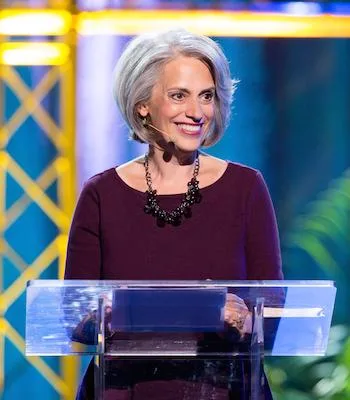
Amanda currently serves on staff at Bethel Church in Jennings, Louisiana, alongside her husband Michael. They have a precious eight-year-old daughter with an adoption story that is nothing short of miraculous and one feisty American Bulldog named Tex. She is a writer, speaker, Bible teacher and pastor’s wife with over a decade of frontline ministry leadership experience.