Hymn of the Month
O Worship the King
Robert Grant, 1779-1838Written: 1833
“Bless the Lord, O my soul! O Lord my God, Thou art very great.” Psalm 104:1
“O Worship the King” draws upon the splendor of 19th-century monarchy as a metaphor for the magnificence of the Almighty. Attributes of an earthly monarch are magnified to communicate the characteristics of the King of kings – one who by nature cannot be described.
The composer, Robert Grant, was born in India while his father was the director of the East India Company. The family moved back to the British Isles in 1790 when Grant’s father became a Member of Parliament. Robert grew up as a devout and dedicated follower of Christ. He became a lawyer and politician.
One day in the early 1830s, as Grant studied Psalm 104, he compared the greatness of the King of Kings with the majesty of British royalty and wrote these words: “Bless the LORD, O my soul, O LORD by God you are very great. You are clothed with honor and majesty….
Grant combines additional biblical images with the splendor of a ruling monarch to paint an image of God as King in earthly terms. In stanza one, the monarch’s role of protector of the realm is captured in “Our Shield and Defender.” Psalm 84: 9 is one of many passages referring to God as our Shield. “The Ancient of Days” parallels the lineage of an earthly monarch – the family line that leads to the throne. References to God as “Ancient of Days” are found in Daniel 7:9, 13 and 22.
Stanza two identifies this monarch as the sovereign of all created order, “whose canopy (is) space” and whose “chariots of wrath” form “deep thunderclouds.” Following the narrative of Psalm 104:8 – 32, stanzas three and four detail God’s earthly handiwork in the natural world.
The final stanza turns to humanity as part of creation: “Frail children of dust, and feeble as frail…” In antithesis to the majesty and all-powerful nature of the Almighty described in earlier stanzas, we find a monarch that manifests “mercies how tender, how firm to the end…” Unlike earthly kings, the unique nature of this ruler is captured in the final line of the hymn, “Our Maker, Defender, Redeemer, and Friend.” This hymn captures in 19th-century terms the fuller nature of God’s relationship to humanity.
In 1832, Grant was appointed Judge Advocate General, and he was knighted in 1834. Soon after, at the age of 50, Sir Robert returned to India as governor of Bombay (now Mumbai). He died there in 1838. He was greatly loved by the people of India, who established a lasting memorial in the form of a medical college bearing his name.
His father Charles was a leader in the evangelical wing of the Church of England. Though involved in secular and political pursuits, Sir Robert maintained a strong interest in the missionary outreach of the church throughout his lifetime.
The hymn was published posthumously in 1839 in Sacred Poems, a volume edited by Grant’s brother, Lord Gleneig. It had appeared in an earlier form in 1833, but the 1839 publication was said to be a “more correct and authentic version.” The tune known as Lyons is attributed to Johann Haydn, younger brother of Joseph Haydn.
Used by permission from “History of Hymns” by Dr. C. Michael Hawn, Director of the Sacred Music Programs and Distinguished Professor, Perkins School of Theology, Southern Methodist University.
Taken from 101 Hymn Stories Copyright © 1982, 2012 by Kenneth W. Osbeck. Published by Kregel Publications, Grand Rapids, MI. Used by permission. All rights reserved.
Taken from Then Sings My Soul Keepsake Edition by Robert J. Morgan Copyright © 2011 Robert J. Morgan. Used by permission of Thomas Nelson
 Jean Sibelius was Finland’s best-known composer. This hymn tune is an arrangement of one movement of “Finlandia”, a tone poem written in 1899 depicting the majestic natural beauty of the composer’s native land.
 Though this hymn is not considered to be an example of great literary writing, it’s simply stated truths have brought solace and comfort to countless numbers of God’s people since it was first written in 1857. So relevant to the basic spiritual needs of people are these words that many missionaries state that it is one of the first hymns taught to new converts. The very simplicity of the text and music has been its appeal and strength.
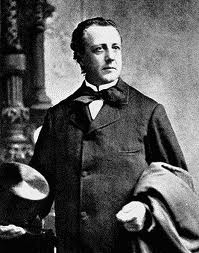 The composer of the music, Charles C. Converse, was well-educated and his talents ranged from law to professional music. Though he was an excellent musician and composer with many of his works performed by the leading American orchestras and choirs of his day, his life is best remembered for the simple music so well suited to Scriven’s text. He composed the tune in 1868 and renamed the poem.
 . James Mountain
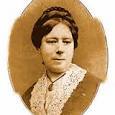 Catherine Winkworth
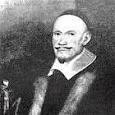 . Johan Cruger
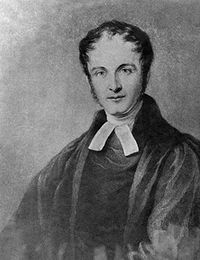 Henry F. Lyte
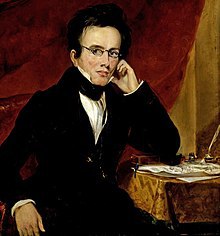 John Goss